Stamped concrete services in Hayward CA - the look of stone on a well-packed base
Tired of a plain gray slab, or pricing out pavers? We press color and a pattern into fresh concrete and seal it.
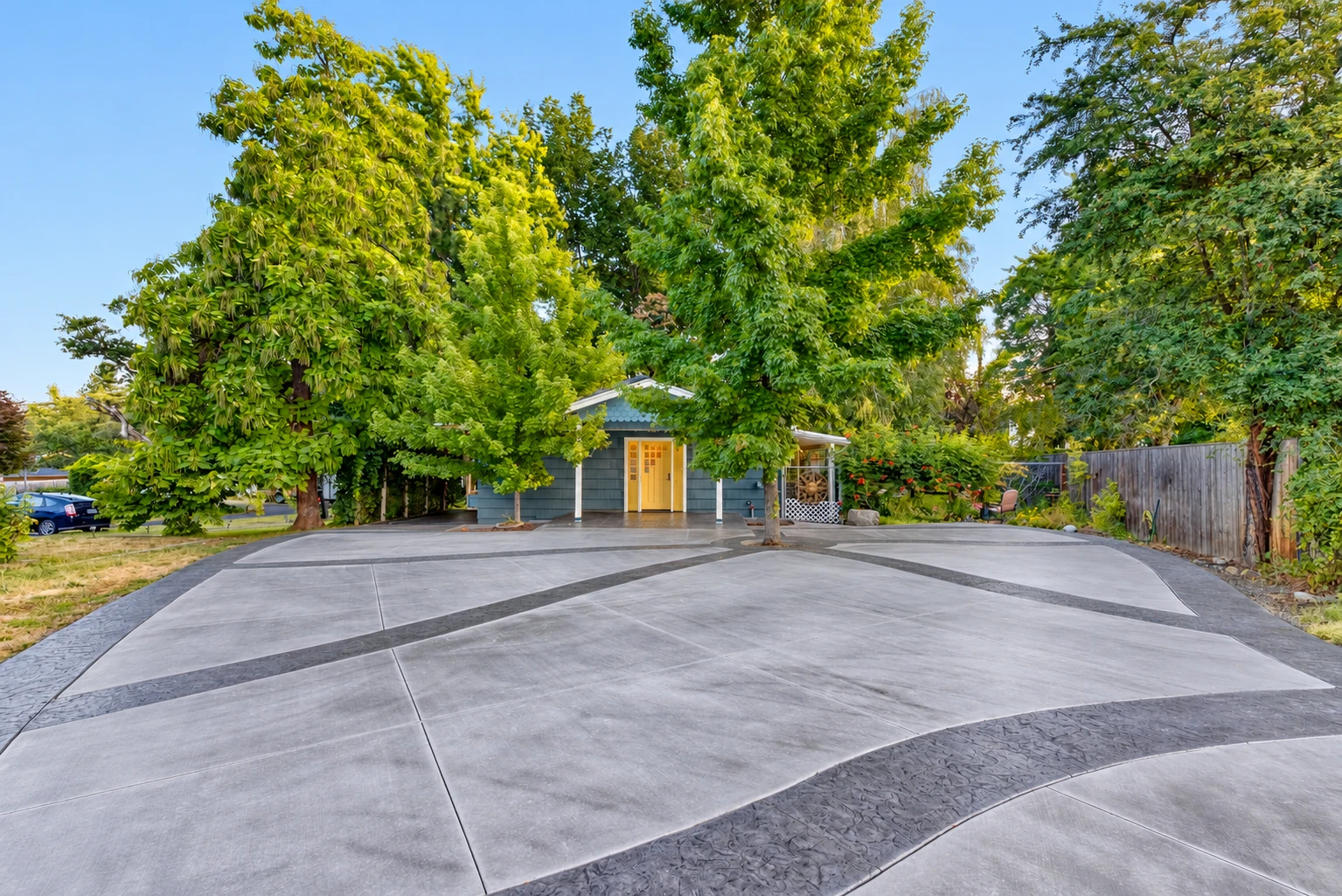
Stamped concrete services in Hayward start with a regular pour. While the concrete is still wet, we spread a color hardener over it, add a release agent so the stamps don't stick, and press in a pattern, so a driveway or walkway reads like brick, slate or stone. Most people call because they want that look without laying pavers, or because an old patterned slab has gone dull and cracked.
The pattern gets the attention, but the base under it decides whether it stays flat and in one piece, so that's the last place we'd save money. Price moves with the size of the area, the base work and the pattern and colors. The schedule mostly turns on city review, and I'll put your own figures in writing.
What our stamped concrete work covers
- Base dug out and packed. We dig out and pack the subgrade, the soil the slab sits on, because a well-packed base keeps the slab sound and helps water drain instead of washing out underneath.
- Tools and crew lined up. Stamps only take in a short window once the concrete starts to set, so we have the tools, pattern, colors and crew ready before the truck arrives.
- Joints hidden in the pattern. Once it sets, we cut control joints, planned lines that give cracks a place to happen, and try to tuck them into the pattern before doing the detail work and sealing.
- State license and insurance. The state licensing board says a contractor needs a license when a job needs a building permit, uses any extra workers or costs $1,000 or more. We're licensed and fully insured.
- I come out, our crew pours. I've run Good Form since 2013 and write every estimate myself after walking the job. Our own crew forms, pours and finishes, and I'm on site running the work.
What goes wrong with stamped concrete
| Problem | What it looks like | Usual fix |
|---|---|---|
| Dull, faded color | What it looks like: Pattern looks flat and gray, water soaks in instead of beading | Usual fix: Clean the surface and reseal it |
| Cracks across the pattern | What it looks like: Cracks running through the stamped design instead of along a joint | Usual fix: Repair the section, or cut out and repour |
| Sunken or tilted sections | What it looks like: One edge has dropped and water pools toward the house | Usual fix: Dig out, rebuild the base and repour that section |
| Flaking, dusty top | What it looks like: Surface chips or powders and color wears off where people walk | Usual fix: Grind and reseal, or repour if it runs deep |
Stamped, pavers or plain concrete
- Stamped concrete. Suits a driveway or walkway where you want the look of brick or stone in one pour, which is usually faster and simpler than setting units one by one.
- Brick or stone. Makes sense if you want the real material and don't mind the extra time, since every piece gets set by hand instead of poured and stamped at once.
- Plain broom finish. A broom finish, a light brushed texture for grip, costs less and suits side paths and a plain concrete sidewalk. Inside, a smooth garage floor is usually the better call.
How a stamped concrete job runs
- We walk the site. After you call or send the form, we set a time and I come out, walk the area and ask what will sit on the slab and the look you want.
- Estimate in writing. I write up the estimate with the prep, the steel that helps hold the slab together and the joints spelled out, so you can see where the money goes.
- Permits sorted out. Once you say go, we handle permits, which the city requires for almost all construction work. Sidewalk or curb work adds an encroachment permit, typically five to ten business days.
- Pour and stamp. Our crew forms, pours and stamps, then the slab needs curing, the wait while it gains strength, before anyone walks or drives on it.
- Final walkthrough. When the sealer's down, I walk the finished job with you and go over what to watch for as it ages.
Keeping stamped concrete sound for years
Most of what keeps a stamped slab sound was decided before the pour, in the packed base, the steel and which way the water runs off. Concrete can still crack, which is why we plan where the joints go. After that, the main job is keeping the sealer fresh, which the questions below cover.
We pour stamped driveways and walkways for homeowners, landlords and small businesses in Hayward and many cities around it, including Castro Valley and San Leandro. Call or send the form, and I'll come out for a free estimate.
Tell us about your slab
Send the area's rough size, where it sits on the lot and the pattern you like. We reply within one business day to set a time to come out.
(510) 264-7026- Free on-site estimate
- Prep, steel and joints in writing
- No obligation to book
Stamped concrete questions we hear
How much does stamped concrete cost in Hayward?
In San Francisco, stamped concrete usually costs about $16 to $34 per square foot, and that's a market figure, not our price. Your own number depends on what your site needs, so I walk it and put a price in writing at the estimate.
How often does stamped concrete need to be resealed?
Stamped concrete gets resealed when it needs it, not on a set schedule of years. The signs are water and stains soaking in instead of beading off, or the color losing its depth. Resealing is the most common upkeep it needs, so it's worth checking the surface now and then.
Will a glossy sealer make stamped concrete slippery?
It can, because high-gloss or wet-look sealers get slippery when wet. They make the color and pattern stand out more, while matte or satin sealers give a natural look with a slight sheen. Where the surface gets wet, weigh the look against grip, and we can talk it through at the estimate.
Does a stamped driveway or walkway in Hayward need city approval?
Usually, yes. The city's permit handout says Planning Division approval is required for concrete driveways and walkways on private property no more than 30 inches above grade and not over a basement or story below. If the work reaches the public sidewalk or curb, ask the city which encroachment permit, minor or major, applies.