Concrete Parking Lot Building in Hayward CA - a lot that handles trucks and sheds water
Cracked, puddled or worn-out lot? We plan the base, slopes and truck routes first, then pour a concrete lot that drains and carries traffic.
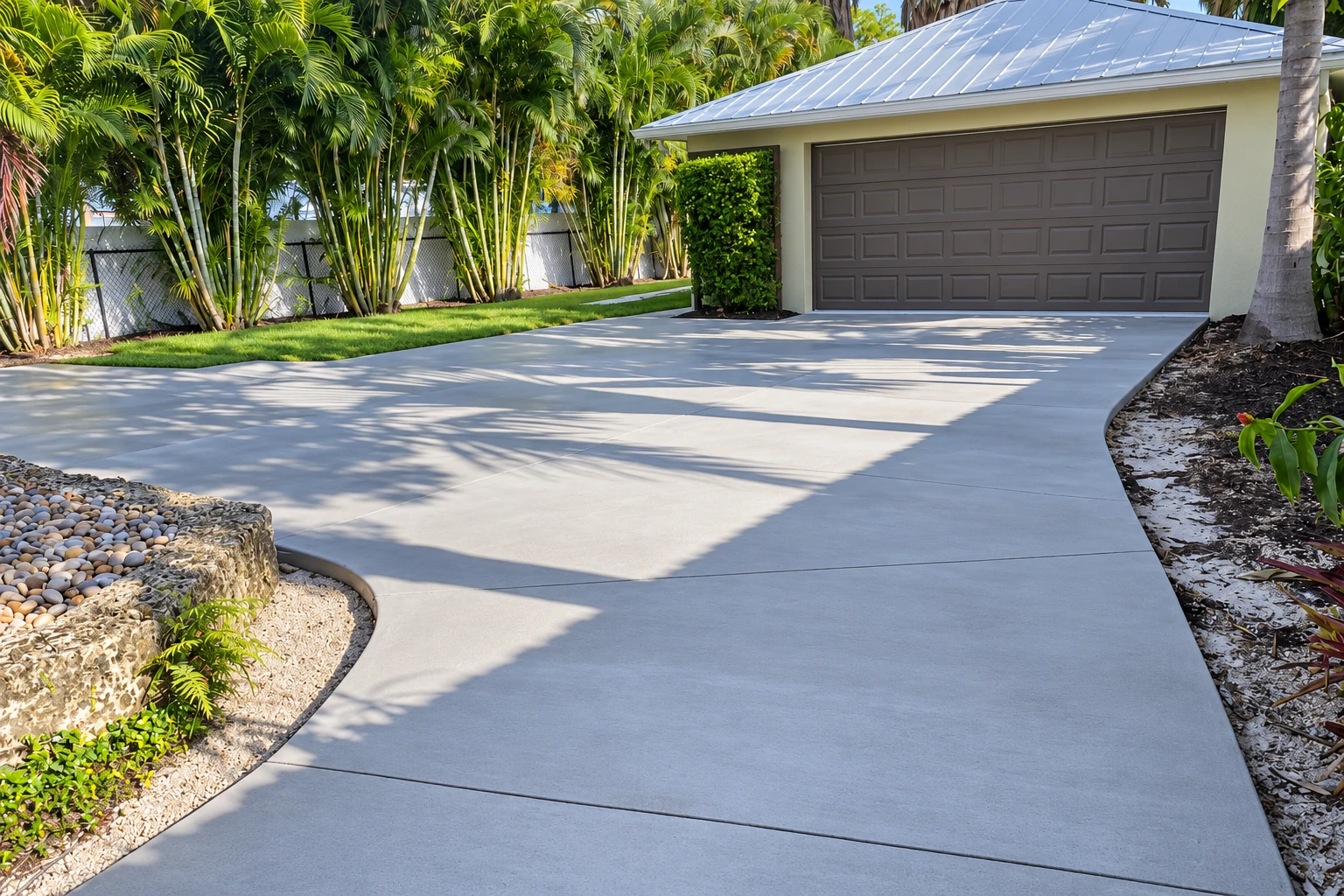
Concrete parking lot building in Hayward, CA works like a much bigger concrete driveway, except the slab has to carry delivery trucks and people walking between cars. Most calls start with asphalt that's breaking up, a gravel lot that ruts and puddles every winter, or a new building that needs parking. I ask early about truck traffic and where the water should run, because those answers set the layout and the slopes.
The price moves with the lot's size, the base work your ground needs, the steel and the truck traffic. The schedule usually turns on the city's permit review more than on the pour, so we look into the permit side first. Your written estimate breaks all of that down for your lot.
What our concrete parking lot work covers
- Layout for cars and trucks. I ask early about delivery trucks, foot traffic and where the water should run, then plan the layout, slopes and any concrete footings for light poles around those answers.
- A base dug out and packed. We dig out and compact the subgrade, the ground the slab sits on, because that's what settles under traffic. If the budget's tight, I'd trim the finish before the base.
- Steel, joints and grip. Rebar, the steel inside the slab, keeps cracks tight, and we cut control joints on time so cracks usually land on our lines. A broom finish gives tires and shoes grip.
- I estimate and run it. I come out and write the estimate myself. Our own crew forms, pours and finishes with me on site, the way we've worked since starting in Hayward in 2013.
- Licensed and fully insured. California's contractor license board counts forming, pouring and finishing concrete pavement as concrete contractor work. We're licensed and fully insured for the jobs we take on.
What goes wrong in a lot
| Problem | What it looks like | Usual fix |
|---|---|---|
| Sinking slabs | What it looks like: Slabs dropping or rocking where trucks turn, stop and park | Usual fix: Dig out, rebuild the packed base, repour those slabs |
| Standing water | What it looks like: Puddles after rain or water running back toward the building | Usual fix: Regrade and repour so water runs to drains or plantings |
| Cracks in odd places | What it looks like: Cracks wandering across slabs instead of along the cut joints | Usual fix: Seal small cracks, replace broken slabs, cut joints on time |
| Chipped, dusty surface | What it looks like: Top layer flaking, chipping or leaving dust on shoes and tires | Usual fix: Patch the chipped spots or replace the worn slabs |
Repair, rebuild or start over
- Repair and steady. When most of the lot is sound and only a few slabs have cracked or sunk, we seal the cracks and steady or lift those slabs, much like our foundation raising work.
- Replace sections. If the damage sits in one area, like a truck route or a low spot that holds water, we cut out those slabs, fix the base and repour.
- Build a new lot. Best for worn-out asphalt, gravel or bare ground, because we can set the base, slopes, truck routes and drainage right from the start.
How a lot job runs, start to finish
- Call or send the form. Tell us the address and what the lot is for, and we'll get back to you to set a time for me to come out.
- Site walk and estimate. I walk the site, ask what will drive on it and how it should look, then write an estimate covering the prep, steel and joints.
- Permit and plans. Once you say go, we sort out the permit. Hayward staff take 20 business days on a grading permit's first review and 10 on each round after.
- Forming and pouring. Our crew digs out and packs the base, sets forms and steel, pours and cuts joints, then the slab cures, a wait while it gains strength for traffic.
- Final walk-through. I walk the finished lot with you, show you the joints and where the water runs, and tell you when it's ready for cars and trucks.
Keeping a concrete lot in good shape
A lot stays sound when water leaves it fast and small cracks get sealed before they spread. The city's stormwater checklist lists sending runoff from uncovered parking lots onto planted areas, so I plan where your water goes before we set a form.
We work for owners of small commercial lots and rentals in Hayward and many of the cities around it, on both sides of the bay, including San Leandro and Fremont. If your lot is due, call or send the form and I'll come walk it with you.
Tell us about your lot
Send the site address, the rough lot size and what kind of truck traffic it gets. We reply within one business day to set a time to walk it.
(510) 264-7026- Free on-site estimate
- No obligation to hire us
- Prep, steel and joints in writing
Parking lot questions we hear
How much does a concrete parking lot cost in the Bay Area?
Reinforced concrete slab work in the Bay Area usually runs about $9 to $16 per square foot, which is the regional going rate, not our quote. Where your lot lands depends on the base work, the steel, the drainage and the truck traffic it has to carry.
Do I need a permit to build a concrete parking lot in Hayward?
Usually yes, since the City of Hayward requires a grading permit for the grading work its code lists, and a new lot almost always involves grading. The application needs a licensed civil engineer's site and grading plan plus a stormwater checklist. We look into it first, or you can call the city at (510) 583-4111 with your address.
How long does a grading permit take in Hayward?
The city says grading permits typically take three to six months to process, not counting the time to revise and resubmit plans. Budget time before that for the engineer's plan, and set your start date with room to spare.
What upkeep does a concrete parking lot need?
Typical upkeep is cleaning and restriping, sealing cracks, repairing spalls, which are chipped spots in the surface, and now and then replacing or stabilizing a slab. Ask what each of those involves before you settle on a design, and I'll walk you through it at the estimate.
Is concrete better than asphalt for a parking lot with delivery trucks?
Concrete is stiffer than asphalt and spreads a load over a wider area of the ground beneath it, according to industry design guidance, which is why it's worth pricing for a lot that sees trucks. The same guidance says a lot serving cars and trucks may use traffic controls to keep trucks off the areas built for cars.